Magyar Műhely Galéria
1072 Budapest, Akácfa u. 20.
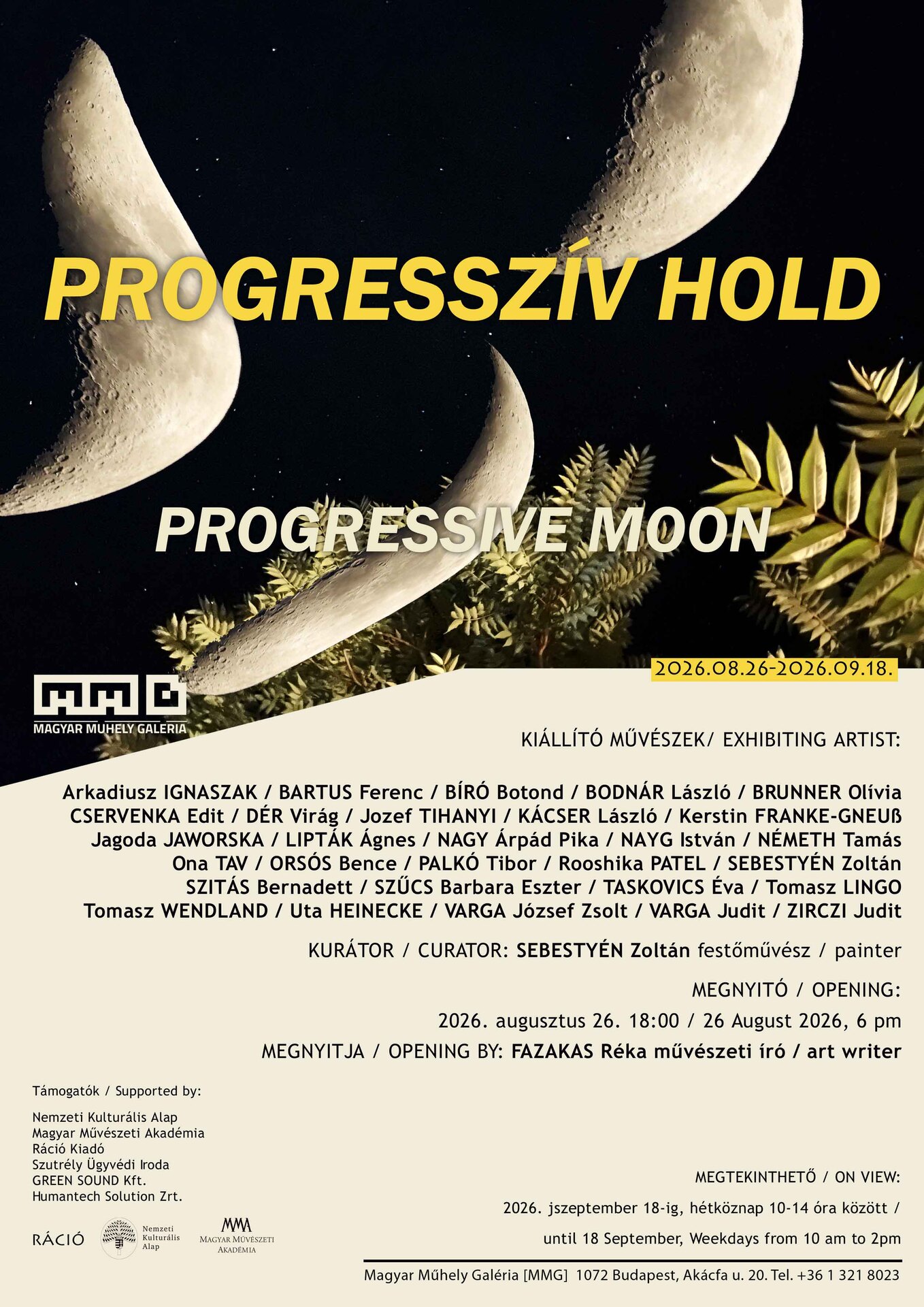
Az idők kezdete óta az ember a Holdra emelte tekintetét. Látta növekedni, eltűnni és visszatérni. Megtanulta az időt a fázisai szerint mérni, történeteket mesélni a fényében, és szimbólummá változtatni a rejtélyét. Talán a teremtés is ebből a tekintetből született: abból a vágyból, hogy formát adjunk annak, amit nem értünk, hogy láthatóvá tegyük azt, amit alig érzékelünk. A Hold arra emlékeztet bennünket, hogy semmi sem marad változatlan. Hogy minden forma ciklusokon halad keresztül, hogy a sötétség is része a folyamatnak, és hogy az eltűnés nem jelenti a végét. Alkotni annyi, mint a Holdhoz hasonlóan haladni: változni, átalakulni, újra megjelenni. Nem feltétlenül előre, hanem folyamatos mozgásban maradva. Visszatérni ugyanahhoz a ponthoz, és mégis minden alkalommal máshonnan tekinteni rá. A Progresszív Hold ezt a mozgást keresi: a látható és láthatatlan, a tudás és a képzelet, a megjelenés és az eltűnés közötti teret. Ahol a változás nem végállapot, hanem újabb kezdet. Egy módja annak, hogy továbbra is fényt hagyjunk az idő végtelen mozgásában.
//
Since the beginning of time, humanity has looked up at the Moon. We have watched it grow, disappear and return. We have learned to measure time through its phases, to tell stories in its light, and to transform its mystery into symbols. Perhaps creation itself was born from this gaze: from the desire to give form to what we do not understand, to make visible what we can barely perceive. The Moon reminds us that nothing remains unchanged, that every form moves through cycles, that darkness is part of the process, and that disappearance does not mean an end. To create is to move like the Moon: to change, to transform, to disappear and reappear. Not necessarily to move forward, but to remain in motion; to return to the same point and yet look at it from somewhere else each time. Progressive Moon explores this movement—the space between the visible and the invisible, between knowledge and imagination, between appearance and disappearance. A space where change is not an end point, but another beginning. A way of leaving traces of light within the endless movement of time.